

The rapid evolution of robotics in healthcare has moved far beyond robotic-assisted surgery. Today, robotics are deeply integrated into the operational backbone of smart hospitals, transforming how healthcare is delivered and managed across the United States. As healthcare systems face ongoing staffing shortages, rising patient volumes, and increasing pressure to improve efficiency, robotics offers a scalable solution to many operational challenges.
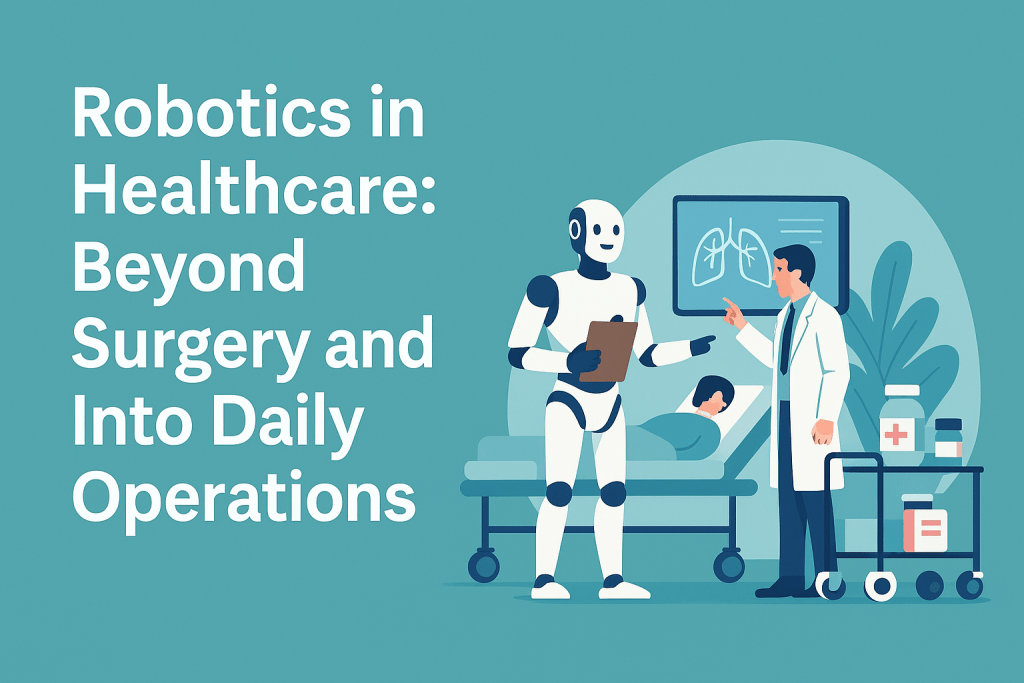
In its earliest applications, robotics in healthcare was synonymous with precision surgical tools like the da Vinci Surgical System. These systems continue to advance, now incorporating AI and real-time data analysis to improve surgical outcomes. However, the modern landscape of healthcare robotics now includes an extensive range of applications—autonomous delivery bots, disinfection robots, robotic nursing assistants, and even AI-powered exoskeletons.
One of the most widespread uses is in logistics. Autonomous mobile robots (AMRs) can be found delivering medications, supplies, meals, and linens within large hospitals. These robots navigate hallways using sensors and mapping algorithms, avoiding collisions while adhering to schedules. Their use dramatically reduces the time staff spend on non-clinical tasks, allowing nurses and technicians to focus on patient care. Hospitals like Cedars-Sinai in Los Angeles and UCSF Medical Center have implemented fleets of delivery robots that operate 24/7.
Sanitization and infection control have also seen innovation through robotics. Ultraviolet (UV) light-emitting robots can autonomously disinfect rooms and surgical suites in a matter of minutes, reducing hospital-acquired infections (HAIs). These systems proved invaluable during the COVID-19 pandemic and continue to play a vital role in infection prevention protocols.
Robotic nursing assistants are another growing field. These units assist with patient lifting, monitoring vitals, and even providing social interaction. While not a replacement for human nurses, they offer vital support in geriatric care and high-demand units, improving safety and reducing caregiver burnout. Some advanced models can perform preliminary diagnostic checks and communicate with patients in multiple languages.
Rehabilitation and physical therapy have also benefited from robotics. Robotic exoskeletons and smart treadmills help patients with mobility issues regain movement after stroke or injury. These systems provide real-time feedback and adaptive resistance, enhancing recovery while collecting valuable data for care teams.
Integrating robotics into daily healthcare operations requires thoughtful planning and investment. Hospitals must ensure that robots can be integrated with existing electronic medical records (EMRs), room scheduling systems, and communication platforms. Staff training is critical—not just in operating the machines but also in understanding their purpose and value.
There are also cultural and ethical considerations. Patients may initially be wary of interacting with robots, especially in sensitive settings like oncology or pediatrics. Transparency, empathy-driven design, and clear communication about the role of robotics can help improve patient acceptance and trust.

Looking forward, robotics will become more personalized and intuitive. With the integration of AI and machine learning, future healthcare robots will anticipate needs, self-optimize workflows, and provide intelligent decision support. Hospitals may deploy robotics as part of a larger smart infrastructure strategy that includes IoT sensors, cloud computing, and advanced analytics.
In conclusion, robotics is no longer an experimental concept—it is a foundational element of smart healthcare in the U.S. From logistics and disinfection to rehabilitation and diagnostics, robotics is helping hospitals become more efficient, safe, and patient-centered. As technology continues to advance, healthcare providers who embrace robotics will be better positioned to deliver high-quality care in the face of growing complexity and demand.


